


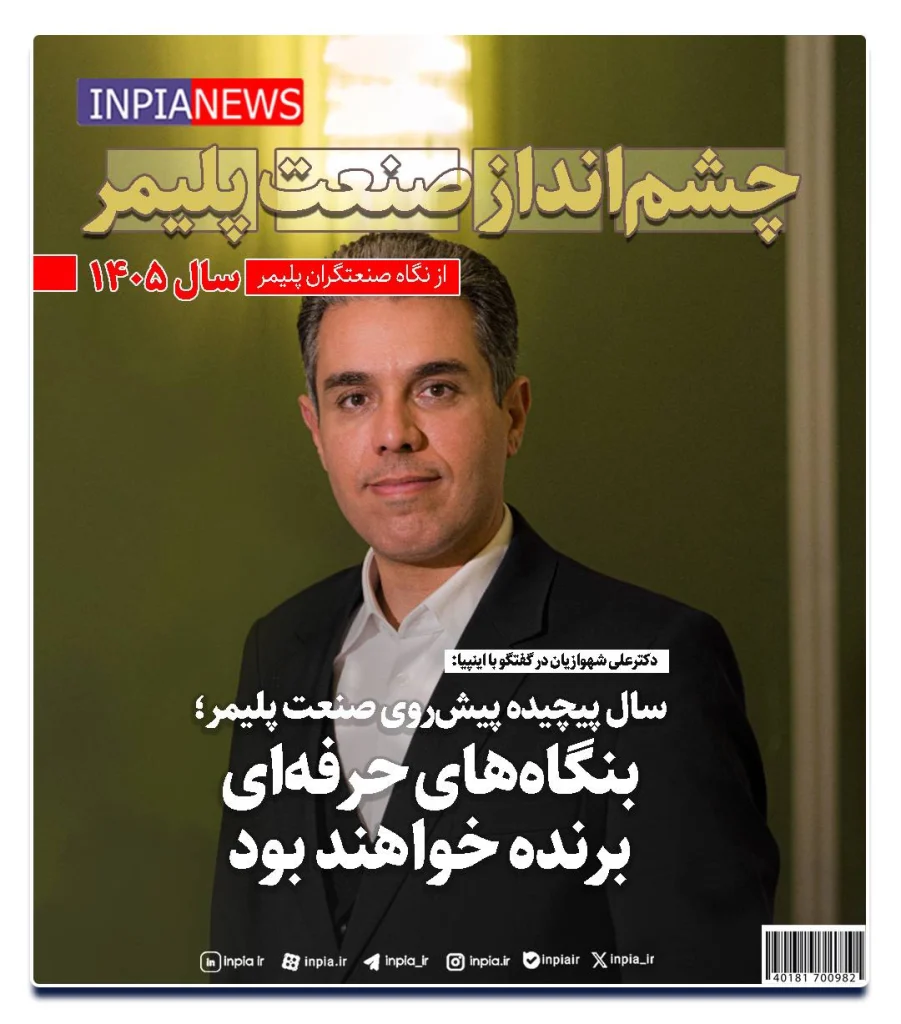
Dr. Ali Shahvazian, Board Member and Chairman of the Export Commission of the National Polymer Industries Association of Iran, outlined the outlook for the polymer industry in the year 1405 (2026–2027), stating that the success of industry participants will depend more than ever on professional management, risk control, and productivity improvement.
In a specialized interview with industrial media, he referred to the country’s economic conditions and noted that variables such as exchange rates, financing costs, logistics expenses, and the energy supply situation remain the most important factors shaping the business environment in the polymer industry.
According to him, these conditions do not necessarily imply recession; however, they increase the complexity of decision-making and will turn the coming year into a year of strategic management for polymer industries.
Capacities of Iran’s Polymer Industry
Referring to the capabilities of Iran’s polymer sector, Shahvazian stated:
The country’s polymer industry enjoys significant competitive advantages in terms of production capacity, technical know-how, and access to regional markets. However, the main challenge lies in the gap between nominal production capacity and actual utilization.
He noted that reducing this gap could strengthen the role of the polymer industry in expanding non-oil exports.
Three Scenarios for the Polymer Industry in 1405
Scenario One: Economic Stability
If relative stability in economic variables is achieved, companies will be able to engage in more accurate and effective planning.
Under such conditions, the following factors could support gradual industry growth:
- Development of stable export markets
- Signing long-term contracts
- Increasing production of specialized products
Scenario Two: Continued Volatility
If economic fluctuations continue, competition based solely on price will no longer be sufficient.
Shahvazian emphasized that:
Companies with more disciplined financial structures and stronger management will demonstrate greater resilience.
Under such circumstances, the following factors will become increasingly important:
- Productivity improvement
- Working capital management
- Diversification of export markets
Scenario Three: Rising Costs
Increases in energy, transportation, or raw material costs may reduce companies’ profit margins.
In such conditions, the following measures will become more critical:
- Waste reduction
- Production optimization
- Cost management
- Industrial cooperation
Moving Toward Value-Based Competition
The Chairman of the Export Commission of the National Polymer Industries Association of Iran stressed that companies must move away from purely price-based competition and shift toward value-added competition.
This approach includes:
- Production of specialized products
- Manufacturing of engineering compounds
- Development of branded finished products
Such strategies can lead to sustainable profitability.
Development of Structured Exports
Shahvazian described export development as one of the most important priorities of the polymer industry and stated:
A transition from occasional exports toward structured and organized export activities is essential.
Proposed measures include:
- Establishment of joint sales offices
- Formation of export consortia
- Cooperation with export management companies
The Importance of Productivity in the Polymer Industry
He identified investment in productivity and technology as one of the most important factors for competitiveness and added:
Productivity improvements can be achieved through:
- Reduction of energy consumption
- Production automation
- Waste reduction
- Process improvement
According to him, every percentage increase in productivity represents a competitive advantage.
Future Export Markets
Shahvazian identified the following regions as having significant growth potential:
- Central Asia
- The Eurasian Economic Union
- Neighboring countries
- East Africa
He emphasized that market diversification will reduce export risks.
Conclusion
The Board Member and Chairman of the Export Commission of the National Polymer Industries Association of Iran emphasized:
The year 1405 should be regarded as a year of increasing resilience for the polymer industry.
He added that the success of companies will depend on:
- Accurate financial planning
- Risk management
- Productivity improvement
- Value chain development